Quick answer
If you want a lighter, comfortable hiking shoe that needs little break-in and usually costs a little less for maintained trails and day hikes, try the Merrell Moab first. If you have wider feet, prioritize a roomier forefoot, tougher build and long-term durability for rougher trails, try the Keen Targhee first.
Short verdict
- Both rate high on midfoot support, heel stability and grip durability — they are proper hikers, not sneakers.
- They split on platform stability (Targhee high, Moab medium) and forefoot width (Targhee on the wider side, Moab regular).
- Both use firmer, protective uppers and sit on the substantial rather than featherweight side.
- Exact version, mid- or low-cut and width option still change the fit.
Comparison table
What to look for
- Choose Moab first for maintained day hikes, easier early comfort and a lower price.
- Choose Targhee first for wider feet, rougher trails, heavier packs and a roomier forefoot.
- Try both with the actual hiking socks you will wear — thicker socks change the fit.
- On descents, confirm your heel stays locked and your toes do not jam forward.
Features to be careful with
- Expecting a running-shoe softness from either — both are firm trail shoes
- Forcing a standard width on a broad foot instead of trying a wide version
- Assuming pressure points or heel lift will disappear on the trail
- Using hikers for all-day urban standing, where a cushioned walking shoe is easier
What each series is for
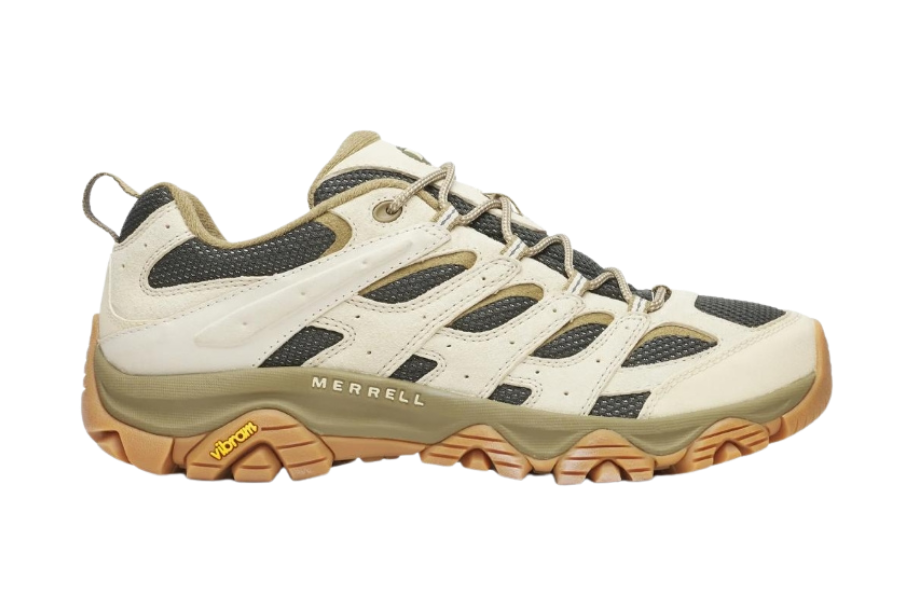
The Merrell Moab is the library's light, comfortable hiker. Its data shows high midfoot support and heel stability, high grip durability, medium platform stability and medium cushioning, a firmer upper, and it sits in a lower price band. That profile describes a day-hiking workhorse: supportive enough for trails, comfortable early, and easy to wear.
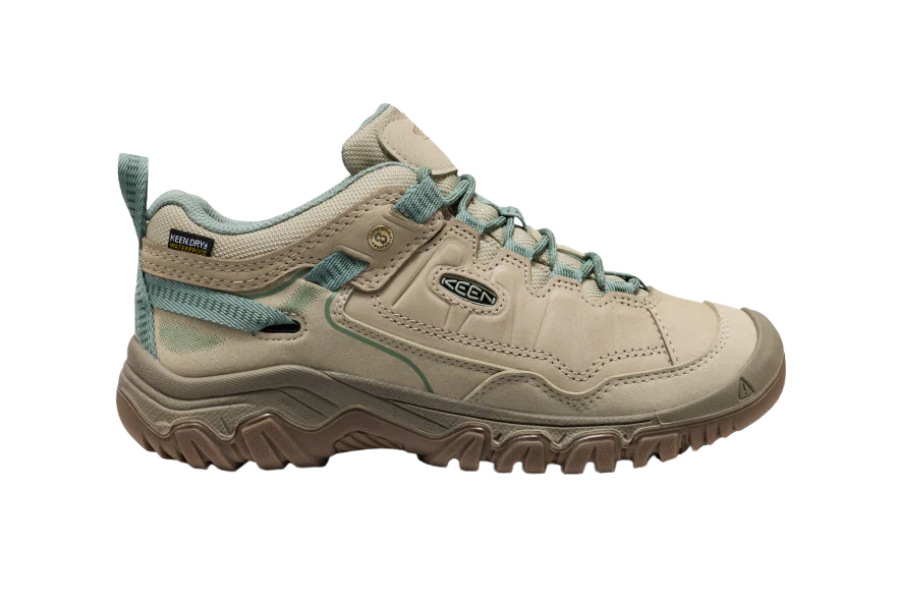
The Keen Targhee is the library's roomier, sturdier hiker. Its data rates midfoot support, heel stability, platform stability and grip durability all high, with medium cushioning, a firm upper, and a forefoot rated on the wider side — one of the few hiking series in the library with a genuinely roomier forefoot. It sits a little higher in price. That profile describes a shoe built for wider feet and tougher use: a stable, durable, waterproof-friendly hiker with space in the toe box.
How the structure feels under your foot
Support and stability: both rate high on midfoot support and heel stability, which is what you want under a pack on uneven ground — a firm arch shank and a heel that does not roll. They split on platform stability: the Targhee rates high versus the Moab's medium, meaning the Targhee feels a touch more planted when the trail gets rough or you carry a heavier load. For easy, maintained day trails the Moab's medium platform is plenty.
Forefoot room is the clearest fit difference. The Targhee's forefoot is rated on the wider side while the Moab is regular. If you have broad feet, bunions, or like thick hiking socks with room to splay your toes, the Targhee is the more accommodating and is one of the roomier hikers in the whole library. The Moab fits a more average-width foot; wider-foot wearers should try a wide width if available.
Upper, comfort and break-in: both use a firmer upper built for trail protection, and both sit on the substantial side. The Moab line is known for being comfortable early with minimal break-in; the Targhee is built tougher and can need a few wears to soften, which is the trade for its durability and waterproof-friendly build. Neither is sneaker-soft — that firmness is what protects your feet on trails. Treat the outsole as the wear item: once the lugs round off or the cushioning stops springing back, it is time to replace them.
Which one for your foot problem or scenario
- Wider feet, bunions, or toes that need room with thick socks: lean Targhee — its wider forefoot is the differentiator; use the fit hub's forefoot checks.
- Rougher trails, heavier packs, wanting the most stable planted feel: lean Targhee (high platform stability).
- Maintained day hikes, wanting easier early comfort and a lower price: lean Moab.
- Average or narrower feet that value a lighter-wearing, quicker-to-break-in shoe: lean Moab, but try the exact width.
- Using hikers for standing or long walks in town: both are firm and substantial; for all-day urban walking a cushioned walking shoe is usually easier — see the running and walking catalog and the standing guide.
- A heel that slips on descents: both have high heel stability, so fit and lacing dominate — see the heel-slip guide, and try boots with the actual hiking socks you will wear.
How to read the comparison below
The table uses only the structure ratings and typical price bands stored in the catalog. The library does not record exact grams, heel-to-toe drop or stack height, so those are discussed qualitatively rather than invented; the Moab line's reputation for feeling lighter in hand is a general market observation, not a catalog rating.
Both are series families; verify the exact current model, cut and width on your own feet.
Shoe-series directions to compare
Compare these as series-level directions, not guaranteed exact-model picks.
Hiking and outdoor
Merrell Moab
Hiking and outdoor series direction from ShoesFinder's catalog. Compare the exact version on foot before treating it as a strong fit match. Typical U.S. retail is about $120-$150.
Hiking and outdoor
KEEN Targhee
Hiking and outdoor series direction from ShoesFinder's catalog. Compare the exact version on foot before treating it as a strong fit match. Typical U.S. retail is about $155-$170.
Try-on checklist
- Try both with the real hiking socks you will wear — thicker socks change the fit noticeably — in your true size and width.
- Walk downhill-slope steps or a ramp if the store has one. Your foot should not jam forward into the toe box and your heel should stay locked; toes need about a thumb's width of room on descents.
- Stand and splay your toes. On the Targhee, confirm the wider forefoot actually gives your toes room; on the Moab, check the regular forefoot does not pinch a broad foot.
- Do a few deep knee bends and a short walk on hard floor. The arch and heel should feel supported; note any upper pinch across the instep.
- Expect firmness — both are trail shoes — but pressure points or a heel that lifts will not improve much on the trail, so judge them honestly in store.
FAQ
Which is better, Merrell Moab or Keen Targhee?
It depends on your feet and trails. The Merrell Moab is the easier-wearing, quicker-to-break-in and lower-priced day hiker for maintained trails; the Keen Targhee is roomier in the forefoot, higher in platform stability and built sturdier for wider feet and rougher terrain. Pick Targhee for width and toughness, Moab for easy comfort and value.
Are Merrell and Keen good for wide feet?
Between these two, the Keen Targhee is the wider-foot choice — its forefoot is rated on the wider side in the catalog, making it one of the roomier hikers available. The Merrell Moab is a regular width, so broad-foot wearers should try a wide version if one is offered rather than forcing the standard fit.
Do I need to break these in?
Both use firmer, protective uppers and are substantial hikers. The Moab line is generally comfortable early with minimal break-in for day hikes; the Targhee, built tougher and waterproof-friendly, may need a few wears to soften. Always test fit in store — true pressure points or heel lift will not disappear on the trail.
Which is better for rough trails and heavy packs?
The Keen Targhee. It rates high on platform stability versus the Moab's medium and is built sturdier, so it feels more planted and protective on rough ground with a load. For easy, maintained day trails the Moab's support and grip are comfortably enough.
Can I wear hiking shoes for standing or walking all day?
They are supportive but firm and substantial, built for trails rather than soft all-day urban comfort. If standing or long pavement walking is your main activity, a cushioned walking or stability shoe is usually easier on the feet — the standing-all-day guide and running and walking catalog cover that.
How long do hiking shoes last?
Watch the tread and cushioning rather than the calendar. Both rate high on grip durability, but once the lugs round off, the midsole stops springing back, or the waterproofing wears through, it is time to replace them even if the upper looks fine. Rotating and drying them properly extends their life.
Turn this into a shortlist
Use the assessment if you are balancing more than one issue, or browse the catalog if you already know the main fit feature you want to compare.